|
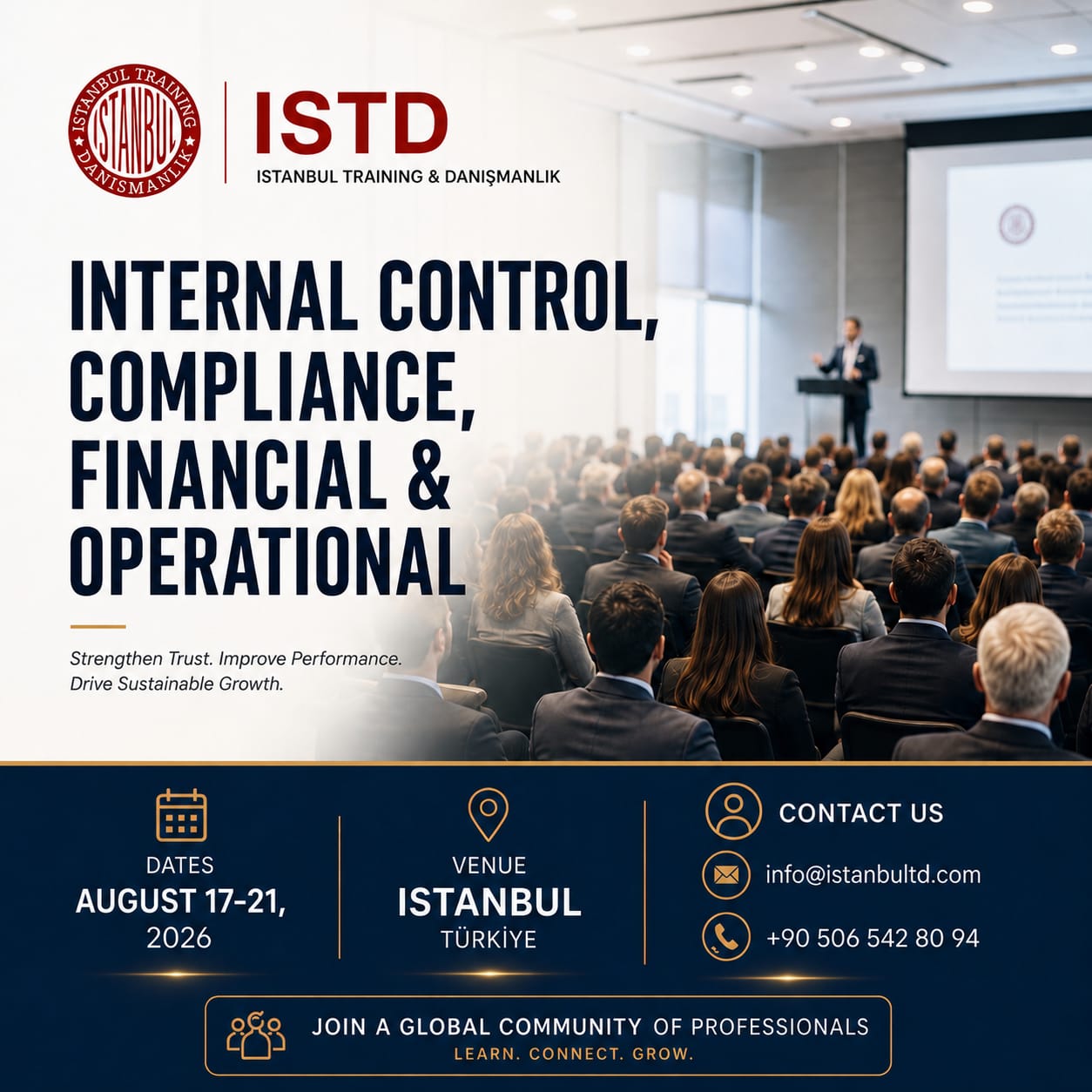
Course |
Internal Control, Compliance, Financial & Operational |
|
Duration |
05 Days |
|
Date |
August 17-21,2026 |
|
Venue |
Istanbul, Türkiye |
|
Investment |
2,590 USD |
|
|
|
|
|
+90 506 542 80 94 |
Course Objectives:
This program is designed to equip professionals with advanced knowledge and practical tools to strengthen internal controls, ensure regulatory compliance, and enhance financial and operational efficiency.
By the end of the training, participants will be able to:
- Design and implement effective internal control systems
- Strengthen compliance frameworks aligned with international standards
- Identify and mitigate financial and operational risks
- Improve financial integrity, reporting accuracy, and transparency
- Enhance operational efficiency through control mechanisms
- Detect and prevent fraud, errors, and non-compliance
- Align governance, risk, and control processes with organizational strategy
Course Outline:
Foundations of Internal Control & Governance
- Internal control concepts and frameworks (COSO model)
- Corporate governance and accountability
- Risk management fundamentals
- Control environment and organizational culture
- Roles of management, audit, and compliance
Financial Controls & Risk Management
- Financial reporting controls
- Budgetary and expenditure controls
- Fraud prevention and detection
- Internal audit functions
- Risk assessment methodologies
Compliance & Regulatory Frameworks
- Compliance management systems
- Regulatory requirements and standards
- AML, anti-corruption, and ethics
- Monitoring and reporting compliance
- Compliance audits
Operational Controls & Efficiency
- Operational risk management
- Process controls and SOPs
- Performance monitoring (KPIs)
- Business continuity and crisis management
- Technology and automation in controls
Integration, Audit & Continuous Improvement
- Integrated control frameworks (GRC)
- Internal audit and assurance practices
- Control evaluation and improvement
- Digital transformation in control systems
- Leadership in governance and compliance
Personal & Organizational Impact:
Personal Impact:
- Enhanced expertise in internal control and compliance
- Stronger analytical and risk management skills
- Improved capability in financial oversight
- Increased professional credibility in governance roles
Organizational Impact:
- Stronger internal control environment
- Reduced fraud, waste, and operational inefficiencies
- Improved compliance with regulatory requirements
- Enhanced financial transparency and accountability
- Better risk management and decision-making
Course Outline:
Internal Control & Governance
Module 1: Introduction to Internal Control
- Definition and objectives
- Types of controls (preventive, detective, corrective)
- Importance in organizations
Module 2: COSO Framework
- Components of COSO
- Application in real organizations
- Control environment
Module 3: Corporate Governance Principles
- Board responsibilities
- Governance structures
- Accountability and transparency
Module 4: Risk Management Fundamentals
- Risk identification
- Risk assessment techniques
- Risk appetite
Module 5: Control Environment & Culture
- Ethical culture
- Tone at the top
- Organizational structure
Financial Controls
Module 6: Financial Control Systems
- Internal financial controls
- Segregation of duties
- Authorization controls
Module 7: Budgetary Control
- Budget planning and monitoring
- Variance analysis
- Cost control techniques
Module 8: Financial Reporting Controls
- Accuracy and reliability
- IFRS/standards overview
- Reporting risks
Module 9: Fraud Risk Management
- Types of fraud
- Fraud detection tools
- Prevention strategies
Module 10: Internal Audit Function
- Role of internal audit
- Audit planning
- Reporting and follow-up
Compliance & Ethics
Module 11: Compliance Frameworks
- Compliance programs
- Policies and procedures
- Compliance culture
Module 12: Regulatory Requirements
- Local and international regulations
- Industry-specific compliance
- Regulatory updates
Module 13: AML & Anti-Corruption
- AML frameworks
- Anti-bribery laws
- Ethical conduct
Module 14: Compliance Monitoring
- Compliance tracking tools
- Reporting systems
- Key compliance indicators
Module 15: Compliance Audits
- Audit procedures
- Findings and reporting
- Corrective actions
Operational Controls
Module 16: Operational Risk Management
- Operational risks identification
- Risk mitigation techniques
Module 17: Process Controls & SOPs
- Designing SOPs
- Process mapping
- Control integration
Module 18: Performance Monitoring
- KPIs and dashboards
- Efficiency metrics
- Continuous monitoring
Module 19: Business Continuity Planning
- Disaster recovery
- Crisis management
- Resilience strategies
Module 20: Technology in Controls
- Automation tools
- ERP systems
- Data analytics for controls
Integration & Improvement
Module 21: Governance, Risk & Compliance (GRC)
- Integrated frameworks
- GRC tools
Module 22: Internal Audit & Assurance
- Risk-based auditing
- Assurance models
Module 23: Control Evaluation
- Testing controls
- Control effectiveness
Module 24: Continuous Improvement
- Process improvement models
- Lean and Six Sigma concepts
Module 25: Leadership in Control & Compliance
- Strategic leadership
- Change management
- Building a control-conscious organization
Training Methodology:
This course adopts a practical, interactive, and executive-level approach:
- Expert-led presentations
- Case studies (banking, public sector, corporate)
- Real-life compliance and fraud scenarios
- Group discussions and peer learning
- Hands-on exercises and risk assessments
- Internal audit simulations
- Role plays and problem-solving workshops
Key Takeaways:
Participants will gain:
- A deep understanding of internal control frameworks and governance
- Strong financial and operational control techniques
- Practical compliance and audit skills
- Tools to detect and prevent fraud and risks
- Ability to design and evaluate effective control systems
- Improved decision-making and organizational performance
- Leadership capability in governance, risk, and compliance