
|
Course |
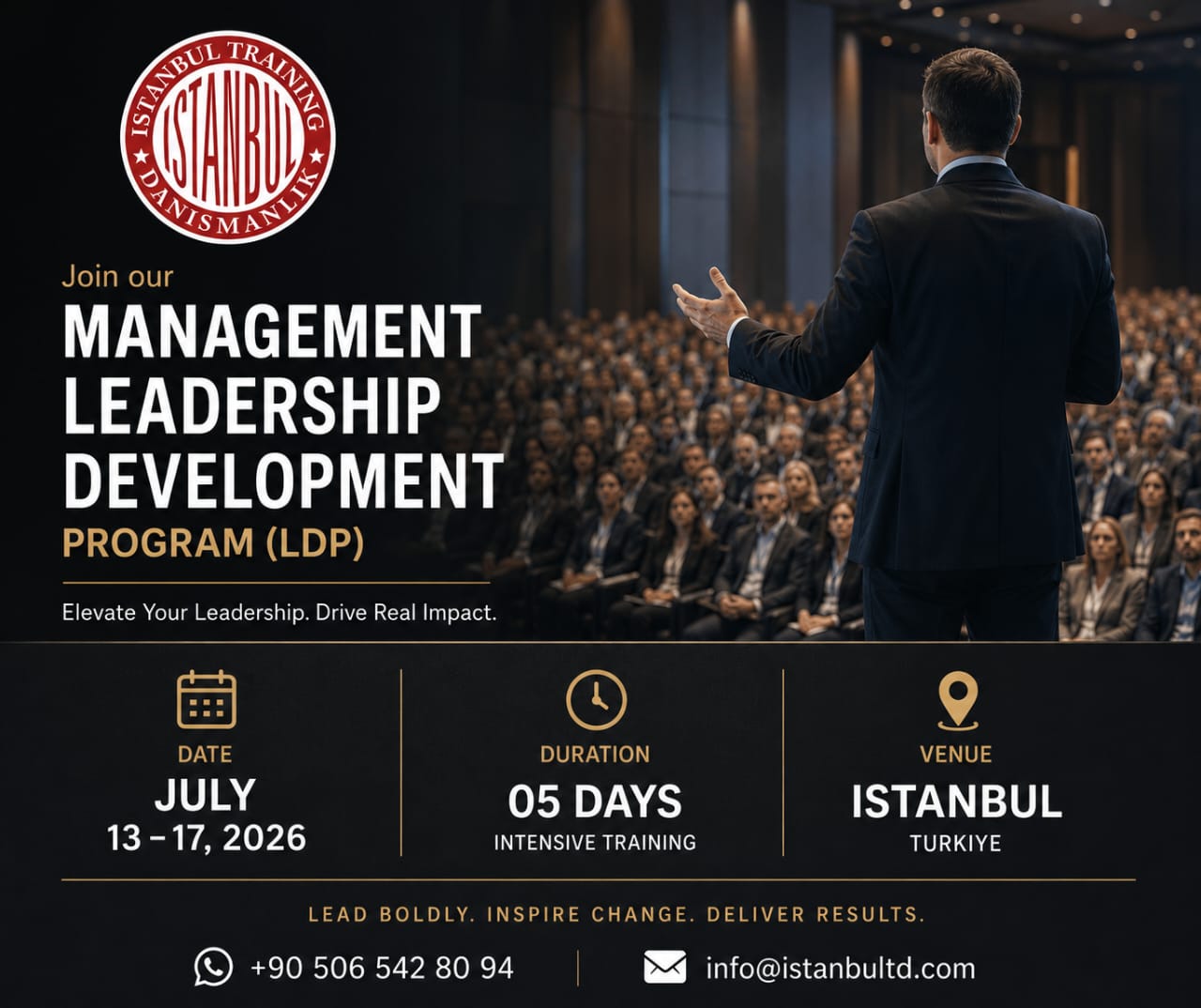
Management & Leadership Development Program (MLDP) |
|
Duration |
05 Days |
|
Date |
July 13-17,2026 |
|
Venue |
Istanbul, Türkiye |
|
Investment |
2,590 USD |
|
|
|
|
|
+90 506 542 80 94 |
OVERALL PROGRAM OBJECTIVES
By the end of the program, participants will be able to:
- Demonstrate strategic, ethical, and adaptive leadership in public institutions
- Strengthen managerial effectiveness and decision-making at senior levels
- Lead people, programs, and reforms under pressure and uncertainty
- Improve service delivery, accountability, and inter-agency coordination
- Apply modern leadership tools to Nepal’s governance and administrative context
Course Outline:
LEADERSHIP FOUNDATIONS & PUBLIC SECTOR CONTEXT
Module 1: Leadership in the Public Sector – Nepal Perspective
- Leadership vs Management in Government
- Role of NMS in national development & governance
- Expectations from senior civil servants in a federal system
- Political–administrative interface: boundaries & professionalism
Exercise: Leadership role-mapping for NMS officers
Module 2: Leadership Styles & Self-Awareness
- Transformational, Transactional & Adaptive leadership
- Situational leadership in bureaucracy
- Emotional intelligence (EQ) for public leaders
- Ethical authority vs positional power
Tool: Leadership self-assessment (360° light version)
Module 3: Values, Ethics & Integrity in Public Service
- Public sector ethics & code of conduct
- Managing conflicts of interest
- Transparency, accountability & integrity systems
- Ethical decision-making models
Case Study: Ethical dilemma in a Nepalese public institution
Module 4: Personal Effectiveness & Executive Presence
- Professional conduct & credibility
- Managing stress and public pressure
- Time management for senior officials
- Executive communication & confidence
Outcome: Personal leadership improvement plan
STRATEGIC MANAGEMENT & POLICY LEADERSHIP
Module 5: Strategic Thinking for Senior Managers
- Strategic vs operational thinking
- Aligning ministry/department goals with national plans
- Understanding policy cycles
- Long-term visioning in government
Exercise: Strategic issue identification for NMS departments
Module 6: Strategic Planning & Performance Management
- Vision, mission & strategic objectives
- Results-based management (RBM)
- KPIs & performance indicators in public sector
- Linking strategy to budgets and resources
Tool: Strategy map & performance dashboard
Module 7: Evidence-Based Policy & Decision-Making
- Data-driven governance
- Using research & evidence in policy formulation
- Managing uncertainty & incomplete information
- Risk-informed decision-making
Case Study: Policy decision under political and social pressure
Module 8: Managing Change & Reform Initiatives
- Change management in government institutions
- Resistance to change & reform fatigue
- Stakeholder engagement strategies
- Sustaining reforms over time
Group Work: Change roadmap for a public sector reform
PEOPLE MANAGEMENT & ORGANIZATIONAL LEADERSHIP
Module 9: Human Resource Leadership in Public Institutions
- Managing diverse and multi-generational workforce
- Motivation beyond financial incentives
- Performance appraisal & feedback
- Talent development & succession planning
Module 10: Team Leadership & Collaboration
- Building high-performing public sector teams
- Inter-departmental coordination challenges
- Managing cross-functional task forces
- Trust-building in bureaucratic teams
Exercise: Team effectiveness diagnostic
Module 11: Communication & Stakeholder Management
- Internal vs external communication
- Managing ministers, media & public expectations
- Crisis communication in public sector
- Negotiation and consensus-building skills
Role Play: Managing difficult stakeholders
Module 12: Conflict Management & Difficult Conversations
- Sources of conflict in public organizations
- Managing staff conflict & political pressure
- Negotiation techniques for senior managers
- Constructive handling of grievances
Outcome: Conflict management action plan
GOVERNANCE, ACCOUNTABILITY & SERVICE DELIVERY
Module 13: Governance Frameworks & Institutional Accountability
- Good governance principles
- Roles of oversight bodies
- Internal controls & compliance systems
- Accountability mechanisms in Nepal’s governance system
Module 14: Financial & Resource Management for Leaders
- Budgeting basics for senior managers
- Financial discipline & value for money
- Preventing misuse of public resources
- Linking budgets to performance
Case Study: Budget prioritization under constraints
Module 15: Risk Management & Crisis Leadership
- Identifying institutional risks
- Managing reputational, operational & political risks
- Crisis leadership & decision-making under pressure
- Learning from failures
Simulation: Crisis scenario in a public agency
Module 16: Improving Public Service Delivery
- Citizen-centric service models
- Service quality & performance standards
- Digital governance & process simplification
- Measuring citizen satisfaction
Exercise: Service delivery improvement plan
FUTURE-READY LEADERSHIP & ACTION PLANNING
Module 17: Leading in a VUCA Environment
- Volatility, Uncertainty, Complexity & Ambiguity
- Adaptive leadership tools
- Scenario planning for public sector leaders
- Building institutional resilience
Module 18: Innovation & Digital Leadership
- Innovation in government
- Digital transformation challenges
- Managing technology-enabled change
- Leveraging data & automation responsibly
Module 19: National Leadership Responsibility & Legacy
- Leadership legacy in public service
- Institutional memory & continuity
- Mentoring the next generation of leaders
- Personal responsibility in nation-building
Module 20: Action Planning, Commitments & Way Forward
- Translating learning into action
- Department-specific leadership action plans
- Peer feedback & refinement
- Personal leadership commitment charter
Outcome: Individual & organizational action plans
TRAINING METHODOLOGY
- Expert-led interactive sessions
- Real public-sector case studies (Nepal & regional)
- Group discussions & simulations
- Role plays & leadership diagnostics
- Practical tools, templates & frameworks
KEY TAKEAWAYS FOR NMS PARTICIPANTS
- Stronger leadership confidence & decision-making ability
- Enhanced strategic and managerial competence
- Improved people leadership and communication skills
- Clear understanding of governance, ethics & accountability
- Practical action plans for institutional improvement