
|
Course |
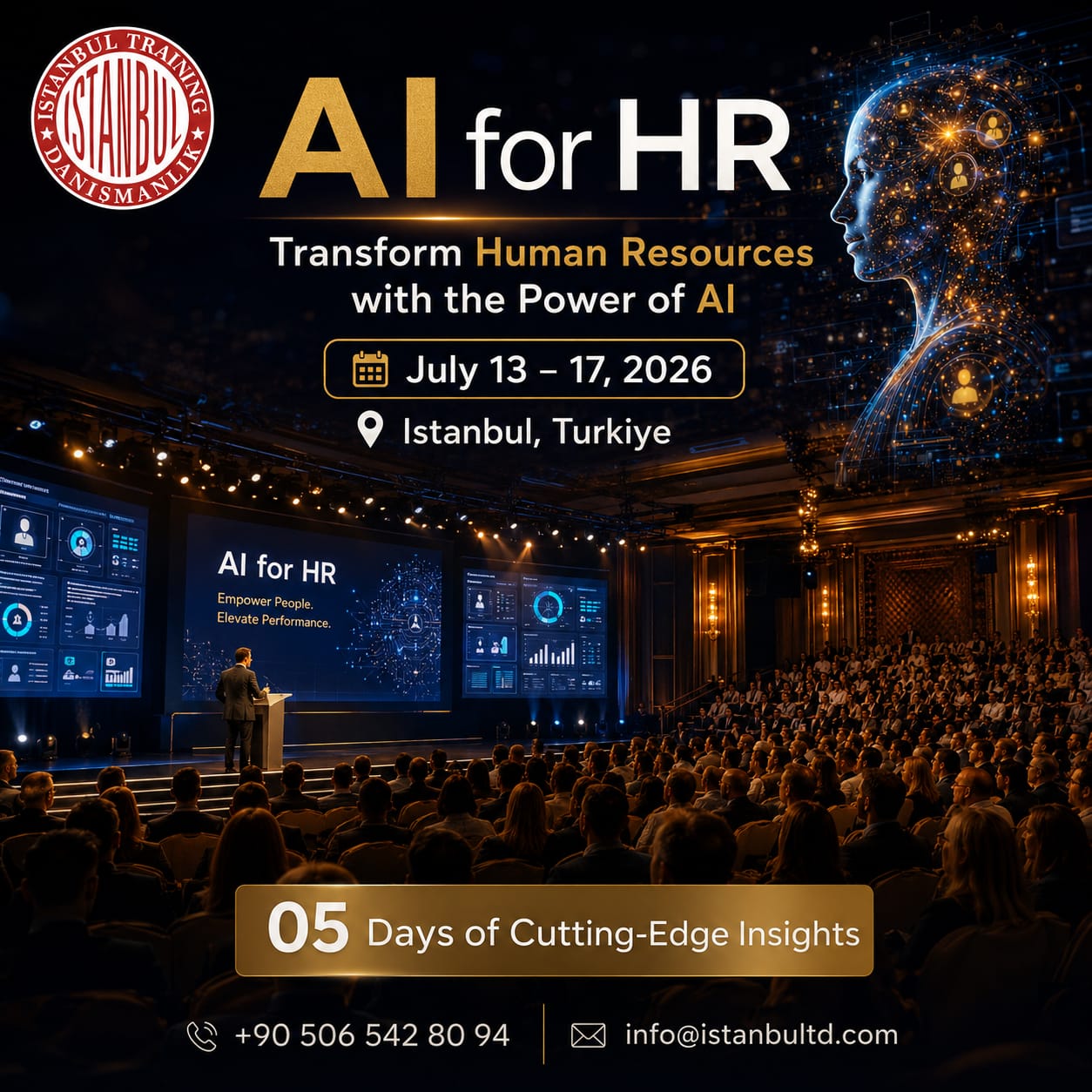
AI for HR: Transform Human Resources with the Power of AI |
|
Duration |
05 Days |
|
Date |
July 13-17,2026 |
|
Venue |
Istanbul, Türkiye |
|
Investment |
2,590 USD |
|
|
|
|
|
+90 506 542 80 94 |
Course Overview
This course is designed for HR professionals, managers, executives, and organizational leaders who want to understand how Artificial Intelligence can transform modern Human Resources. The program focuses on practical AI applications in recruitment, workforce planning, employee engagement, learning and development, performance management, HR analytics, compliance, and strategic decision-making.
Participants will learn how to use AI responsibly to improve HR efficiency, reduce repetitive work, enhance employee experience, and support data-driven people decisions.
Course Objectives:
By the end of this course, participants will be able to:
- Understand the role of AI in transforming modern HR functions.
- Identify practical AI tools and use cases for HR operations.
- Apply AI in recruitment, onboarding, performance, engagement, and learning.
- Use HR analytics to support better workforce decisions.
- Improve employee experience through automation and personalization.
- Understand ethical, legal, and data privacy risks in AI-driven HR.
- Develop an AI adoption roadmap for HR departments.
- Align AI initiatives with organizational strategy and workforce goals.
Personal and Organizational Impacts
Personal Impacts
Participants will gain:
- Stronger confidence in using AI for HR tasks.
- Better understanding of AI tools for productivity.
- Improved ability to analyze workforce data.
- Practical skills for AI-supported decision-making.
- Readiness to lead HR transformation initiatives.
Organizational Impacts
Organizations will benefit from:
- Faster and more efficient HR processes.
- Improved recruitment and talent management.
- Better workforce planning and employee engagement.
- More data-driven HR strategies.
- Reduced administrative workload.
- Stronger HR compliance and governance.
Course Outline
Foundations of AI in Human Resources
Module 1: Introduction to AI and the Future of HR
- What AI means for Human Resources
- Key AI concepts HR professionals must know
- How AI is changing traditional HR roles
- Opportunities and challenges for HR teams
Module 2: AI Transformation in the HR Function
- HR digital transformation vs. AI transformation
- Moving from manual HR to intelligent HR
- AI maturity levels in HR departments
- Building an AI-ready HR mindset
Module 3: Practical AI Use Cases Across HR
- Recruitment and screening
- Employee engagement
- Learning and development
- Performance management
- HR service delivery and chatbots
Module 4: HR Data as the Foundation of AI
- Importance of clean and reliable HR data
- Employee data sources
- Data quality issues in HR
- Preparing HR data for AI tools
Module 5: AI Ethics, Fairness and Responsible HR
- Bias in AI hiring and promotion tools
- Fairness and transparency in HR decisions
- Human oversight in AI-based recommendations
- Responsible AI principles for HR
AI in Recruitment, Selection and Onboarding
Module 6: AI-Powered Talent Acquisition
- Automating candidate sourcing
- AI-based job matching
- Talent pool development
- Improving recruitment speed and quality
Module 7: Smart CV Screening and Candidate Shortlisting
- How AI screening tools work
- Benefits and limitations of automated screening
- Avoiding bias in candidate filtering
- Designing fair shortlisting criteria
Module 8: AI in Interviews and Assessment
- AI-supported interview preparation
- Digital assessments and scoring
- Competency-based evaluation tools
- Human judgment vs. machine recommendations
Module 9: Predictive Hiring and Workforce Fit
- Predicting candidate success
- Skills-based hiring using AI
- Cultural and behavioral fit considerations
- Risks of over-reliance on prediction tools
Module 10: AI-Enhanced Onboarding
- Personalized onboarding journeys
- AI chatbots for new employees
- Automating onboarding documents and FAQs
- Measuring onboarding effectiveness
AI for Employee Experience, Engagement and Performance
Module 11: AI for Employee Experience
- Personalizing employee services
- HR self-service portals
- AI chatbots for HR support
- Improving employee satisfaction
Module 12: AI in Employee Engagement
- Sentiment analysis and engagement surveys
- Identifying engagement risks
- Understanding employee feedback using AI
- Action planning from engagement insights
Module 13: AI in Performance Management
- Continuous performance tracking
- AI-supported performance conversations
- Goal setting and progress monitoring
- Reducing subjectivity in performance reviews
Module 14: AI for Learning and Development
- Personalized learning recommendations
- Skills gap analysis
- AI learning assistants
- Measuring training impact
Module 15: AI for Career Development and Succession Planning
- Mapping employee skills and potential
- Career path recommendations
- Succession planning analytics
- Building internal talent pipelines
HR Analytics, Workforce Planning and Decision-Making
Module 16: Introduction to People Analytics
- What people analytics means
- Key HR metrics and indicators
- Descriptive, predictive and prescriptive analytics
- Turning HR data into business insight
Module 17: AI for Workforce Planning
- Forecasting workforce needs
- Skills demand analysis
- Headcount planning
- Scenario-based workforce planning
Module 18: AI in Retention and Turnover Prediction
- Identifying turnover risks
- Employee behavior patterns
- Retention strategy using analytics
- Ethical use of predictive retention tools
Module 19: AI for Compensation and Benefits
- Salary benchmarking
- Pay equity analysis
- Benefits personalization
- Compensation planning support
Module 20: AI Dashboards and HR Reporting
- Building useful HR dashboards
- Visualizing workforce trends
- Executive HR reporting
- Communicating insights to leadership
AI Strategy, Governance and HR Transformation Roadmap
Module 21: AI Governance for HR
- AI policies for HR departments
- Roles and responsibilities
- Human review and approval processes
- Governance for vendors and AI tools
Module 22: Data Privacy and Compliance in AI-Driven HR
- Employee data protection
- Consent and transparency
- Privacy risks in HR automation
- Compliance considerations for HR leaders
Module 23: Selecting AI Tools for HR
- Criteria for choosing HR AI tools
- Vendor evaluation checklist
- Integration with existing HR systems
- Cost, risk and scalability factors
Module 24: Change Management for AI Adoption
- Managing employee concerns
- Building trust in AI systems
- Training HR teams and managers
- Communication strategy for AI adoption
Module 25: Developing an AI Roadmap for HR
- Identifying priority HR use cases
- Setting short-term and long-term goals
- Building an implementation roadmap
- Measuring AI success in HR
Training Methodologies
The course will use a practical and interactive learning approach, including:
- Expert-led presentations
- Group discussions
- Case studies
- HR scenario exercises
- AI tool demonstrations
- Practical worksheets
- Group presentations
- Problem-solving activities
- Action planning sessions
Main Takeaways
Participants will leave the course with:
- A clear understanding of AI applications in HR.
- Practical knowledge of AI tools and HR use cases.
- Ability to identify AI opportunities within HR functions.
- Understanding of AI risks, ethics and compliance.
- Skills to use HR analytics for better decisions.
- A practical AI roadmap for HR transformation.
- Confidence to support AI adoption in their organizations.